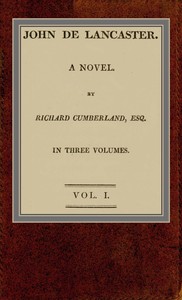
John de Lancaster: a novel; vol. I. by Richard Cumberland
Richard Cumberland’s John de Lancaster is a fascinating window into the early 1800s, but it reads like a gripping family secret slowly unraveling. Published in 1809, it’s the first part of a story that feels both of its time and weirdly relatable today.
The Story
The novel follows John de Lancaster from his birth into a prominent English family. Right from the start, things are complicated. There’s a cloud of mystery around his origins that his powerful grandfather is determined to control. John’s childhood is strange and sheltered, almost like he’s being prepared for a role he doesn’t understand. As he grows up and steps into high society, he’s caught between his own decent nature and the ambitious, often corrupt, world of his family and their associates. The plot isn’t about huge battles or travel to exotic lands; it’s a quieter, more psychological journey. It’s about John trying to build his own character and find his moral footing while everyone around him seems to be playing a different, shadier game. The central drive is discovering the truth about himself and whether he can escape the destiny his family has planned.
Why You Should Read It
I loved this book for its characters. John is genuinely good-hearted, which makes watching him navigate a selfish world incredibly engaging. You root for him. Cumberland has a sharp, sometimes satirical eye for the social climbers and hypocrites that surround John. The dialogue crackles with polite insults and hidden meanings. It’s also a brilliant study of nature versus nurture. Is John a product of his noble blood, or is he shaped by the principles he chooses to hold onto? The book asks big questions about integrity and identity without ever feeling preachy. It’s more like you’re overhearing the internal struggle of a man who wants to be better than his circumstances.
Final Verdict
This is a perfect pick for readers who love classic literature but want something a little off the beaten path. If you enjoy the social tension of Jane Austen but wish it had a more central, driving mystery about personal identity, you’ll find a lot to love here. It’s also great for anyone interested in the history of the novel itself—seeing how writers were exploring psychology and family drama long before it became a standard theme. Fair warning: it’s Volume I, so the story continues, but this first installment is a complete and satisfying arc that will absolutely make you want to find out what happens next to John de Lancaster.
This publication is available for unrestricted use. You can copy, modify, and distribute it freely.