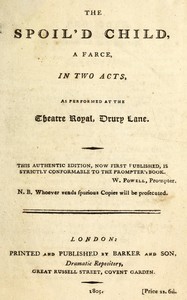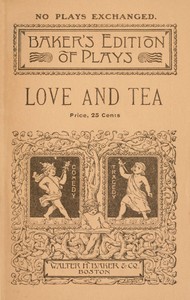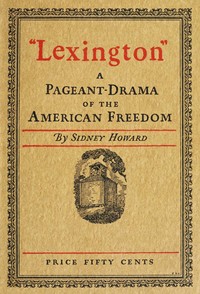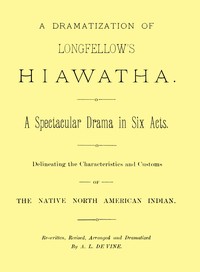
eBooks
90 Books foundAbout the IBEJE Public Domain Literature Library
The IBEJE Public Domain Literature Library offers a curated collection of 90 public-domain dramatic works, ranging from ancient Greek tragedies to early 20th-century farces. Each book record includes author, title, source attribution, and a critical note designed to guide readers through the text. The catalogue is organized into four categories—Adventure Picaresque Fiction; Wars, Revolutions & Nations; World Events in Context; and School, Friendship & Growing Up—each serving as a navigational lens rather than a definitive literary judgment.
Browsing the Catalogue
Readers may browse by category, search by title or author, or follow curated reading paths. Each book page includes bibliographic details from Project Gutenberg and an editorial note that highlights linguistic patterns, structural choices, and thematic tensions. The catalogue does not claim exhaustive coverage; it reflects the compiler's selection of works that reward close reading.
Three Practical Reading Paths
- Path of British Comedy: Begin with W. S. Gilbert's Original Plays, Second Series (id 294) for witty wordplay, then move to Ben Jonson's Every Man in His Humour (id 231), and conclude with St. John Hankin's Mr. Punch's Dramatic Sequels (id 283) for satirical afterthoughts.
- Path of Psychological Drama: Start with Ibsen's Hedda Gabler (id 229), continue with Strindberg's Plays, Second Series (id 250), and end with Emlyn Williams' Night Must Fall (id 234) for escalating tension.
- Path of Historical Spectacle: Read Schiller's The Piccolomini (id 232), then Chapman's The Treason and Death of Benedict Arnold (id 266), and finally Mary Johnston's The Goddess of Reason (id 290) for revolutionary drama.
Source Attribution
All texts are sourced from Project Gutenberg and are in the public domain in the United States. Each record includes publisher attribution and links to the original source. No works under copyright are included.
Categories as Navigation Aids
The four categories group works by shared themes—poetry and performance, war and revolution, world events, and coming-of-age. These groupings are suggestive, not exhaustive; many works could fit multiple categories. Readers are encouraged to explore across categories.
Differences from Other Catalogues
Unlike general literature archives, this catalogue emphasizes editorial notes that focus on specific textual features rather than plot summaries. It offers guided reading paths and category overviews to support independent exploration.
Bibliographic dates and catalogue measurements
The catalogue distinguishes the Project Gutenberg digital release from a work’s original or first publication. Project Gutenberg is identified as the digital source for the edition available here; its release year is therefore shown as Gutenberg Release Year, not as the work’s original publication year.
When an explicit first-publication or issue date can be supported directly by the title or issue information, it may be shown separately as First Publication Year. When that date cannot be confirmed, the catalogue displays Not confirmed rather than guessing a year.
Where the source text can be measured reliably, the catalogue may provide word count and estimated reading time. These measurements describe reading scope and are not quality rankings.
The current catalogue contains 4 active subject categories: Adventure Picaresque Fiction, Fantasy Juvenile Worlds, Science Fiction Utopias, and Historical Psychological Social Fiction. Categories are browsing aids and may overlap where a work reasonably fits more than one subject.
- Featured