
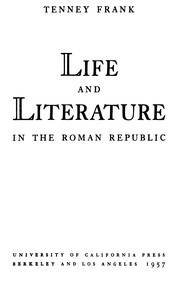
Life and literature in the Roman republic by Tenney Frank
Most history books tell you what happened. Tenney Frank's classic work is obsessed with why it felt the way it did. He connects the dry political facts of the Roman Republic's rise and fall directly to the art and writing it produced. It's a biography of a culture, told through its words.
The Story
There isn't a traditional plot, but there's a powerful narrative engine. Frank traces the journey of Rome from a scrappy, practical, farming society to a wealthy, anxious superpower. He shows how each massive shift—conquering Italy, fighting Carthage, the social wars, the slide into civil war—left a direct mark on its literature. The early, blunt legal texts give way to the complex poetry of Catullus, which itself feels different from the grand, public works of Cicero wrestling with a republic coming apart at the seams. The 'story' is how a people's inner life struggles to keep up with its outward conquests.
Why You Should Read It
This book makes the ancient world breathe. Frank has a gift for showing the direct link between lived experience and creative output. You see how the stress of constant warfare created a literature obsessed with order and stability. You understand why love poetry got so personal and intense when traditional public life was breaking down. It turns Roman writers from names in a textbook into sensitive observers trying to make sense of their collapsing world. It gave me a new appreciation for works I'd found stuffy before; now I see them as urgent, human documents.
Final Verdict
This isn't a breezy beach read, but it's far from a dry academic text. It's perfect for anyone with a budding interest in Rome who wants to go deeper than the legions and emperors. If you enjoy history that focuses on culture and mindset, or if you're a literature fan curious about how great writing is forged in times of crisis, you'll find this fascinating. It’s a brilliant reminder that even the mightiest empires were built, and chronicled, by people with all the usual hopes and fears.
This digital edition is based on a public domain text. It is available for public use and education.
Richard Thomas
1 year agoI appreciate how this edition approaches the core problem, the case studies and practical examples provided add immense value. It’s hard to find this much value in a single source these days.
Edward Hill
1 year agoJust what I was looking for.




Matthew Anderson
2 years agoUnlike many other resources I've purchased before, the clarity of the writing makes even the most dense sections readable. Top-tier content that deserves more recognition.