
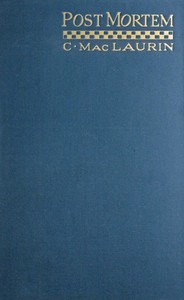
Post mortem: Essays, historical and medical by C. MacLaurin
Don't let the old-fashioned title fool you. Post Mortem is a series of brilliant detective stories, but the crimes are centuries old and the victims are kings, generals, and poets. Dr. Charles MacLaurin, writing in the 1920s, acts as both historian and medical examiner. He gathers the evidence—diary entries, doctors' notes, eyewitness accounts—and then applies his contemporary medical knowledge to give us a new cause of death.
The Story
There isn't one single plot. Instead, each essay is a case file. MacLaurin picks a famous historical figure and investigates their final illness. He looks at the symptoms described at the time and tries to match them with a modern (for him) diagnosis. Did Henry VIII's legendary temper and health problems come from syphilis, or something else? What secret ailment plagued the 'Merry Monarch,' Charles II? He even tackles literary figures, questioning whether the poet Percy Shelley's death was a simple drowning or had a medical cause. The book moves from the battlefield to the royal bedchamber, always focused on that moment where a life ended and history was changed.
Why You Should Read It
What I loved most was the feeling of watching a sharp, curious mind at work. MacLaurin isn't just listing facts; he's arguing a case. You can almost see him sifting through the old texts, getting excited by a clue, and dismissing a popular myth because the symptoms don't add up. It makes history feel immediate and human. These weren't just names in a textbook; they were people who got sick, felt pain, and had doctors who were often guessing. The book is also a snapshot of what medicine knew—and didn't know—a century ago, which is fascinating in itself. It’s less about gruesome details and more about the puzzle of the past.
Final Verdict
This is a perfect book for anyone who enjoys history, true crime, or medical stories. If you’ve ever watched a documentary and thought, 'but what if they’re wrong about what happened?' this book is for you. It's not a heavy academic text; it's a collection of engaging, sometimes opinionated, essays you can read one at a time. You’ll come away looking at history's turning points not just as matters of politics or war, but as moments shaped by human bodies that broke down. A truly unique and thought-provoking read.
This book is widely considered to be in the public domain. It serves as a testament to our shared literary heritage.
Kimberly Perez
1 year agoThis digital copy caught my eye due to its reputation, the argument presented in the middle section is particularly compelling. Thanks for making such a high-quality version available.


Emily Anderson
2 years agoI stumbled upon this title during my weekend research and the quality of the diagrams and illustrations (if applicable) is top-notch. Truly a masterpiece of digital educational material.