
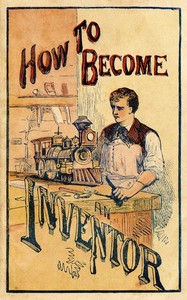
How to become an inventor : Containing experiments in photography, hydraulics,…
Let's be clear: this isn't a novel. There's no fictional plot or character arc. Instead, the 'story' here is the journey of an idea, from a spark of curiosity to a working invention. Aaron A. Warford, writing in the late 19th century, acts as your direct guide. He structures the book as a series of practical lessons, each focused on a different branch of science and technology.
The Story
Warford starts by dismantling the myth of the lone genius. He insists that invention is a method, not magic. The book then launches into a series of experiments. You'll learn the basics of early photography—mixing chemicals, preparing plates. You'll explore hydraulics by building simple models to understand water pressure and force. He covers areas like pneumatics and basic mechanics, always with an eye toward application. The 'narrative' is your own progress as you follow his clear, step-by-step instructions. The conflict isn't person vs. person, but person vs. ignorance. The resolution is the satisfying click of understanding when an experiment works and you see the principle in action.
Why You Should Read It
I loved this book for its sheer, unbridled enthusiasm for making. Warford's voice is encouraging and practical. Reading it feels like having a clever, patient grandfather in your workshop. Beyond the cool historical factor of handling glass photographic plates, the core message is timeless: play is the engine of discovery. This book is a powerful reminder that innovation often starts with simple, hands-on tinkering. It reconnects you with the physical world in a way that scrolling on a phone never can. The experiments are accessible, requiring mostly common materials, which makes the science feel immediate and democratic.
Final Verdict
This is a perfect read for curious minds, hobbyists, teachers looking for engaging project ideas, or anyone suffering from creative block. It's especially great for parents and kids to explore together. History buffs will geek out over the 1880s perspective on technology. If you're a fan of makerspaces, STEAM education, or shows like 'The Repair Shop,' you'll find a kindred spirit in Warford. Just don't expect a modern textbook—embrace the charmingly old-fashioned language and the thrill of learning from a primary source. It's less about becoming the next Edison and more about rediscovering the inventor that might be hiding inside you.
The copyright for this book has expired, making it public property. Distribute this work to help spread literacy.
Mary Smith
8 months agoI appreciate the objective tone and the evidence-based approach.
Lisa Jones
1 year agoText is crisp, making it easy to focus.
James Lee
1 year agoFast paced, good book.
Amanda Wilson
1 year agoSolid story.


Jennifer Smith
8 months agoGreat value and very well written.