
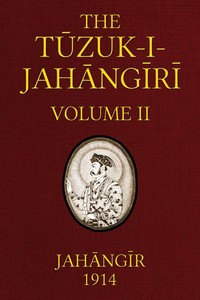
The Tuzuk-i-Jahangiri: or, Memoirs of Jahangir (Volume 2 of 2) by Jahangir
Let's be clear: this is not a novel with a three-act plot. It's a personal memoir, a diary of a king. 'The Tuzuk-i-Jahangiri' is Emperor Jahangir's own account of his reign, picking up where his father Akbar's story left off. He chronicles the day-to-day life of ruling the Mughal Empire—administrative decisions, military campaigns, court intrigues, and the founding of new cities.
The Story
The 'story' is Jahangir's life from his own perspective. He details his efforts to consolidate his power, his complex relationship with his powerful wife, Nur Jahan, who became a crucial political partner, and his endless travels across his kingdom. He writes vividly about hunting expeditions, his meticulous observations of animals and plants, and his passion for commissioning exquisite art. But woven through all the royal business is a constant, quieter thread: his personal battles and his deep desire to be remembered as a just and great ruler, not just Akbar's son.
Why You Should Read It
You should read this because it's shockingly personal. History books give us facts; this gives us a voice. Jahangir doesn't hide his flaws. He admits his struggles with addiction, his moments of vanity, and his deep insecurities. When he describes the perfect balance of a wine cup or the beauty of a rare bird, you forget he's an emperor. He feels human. His love for his wife, Nur Jahan, and the political power he openly shared with her, provides a fascinating glimpse into a unique royal partnership. This book removes the marble statue and shows you the living, breathing, complicated man underneath the crown.
Final Verdict
This is perfect for anyone who loves biography, history, or just a great human story. If you enjoyed the drama of historical fiction but want the real, unfiltered account, this is your book. It's a bit denser than a modern memoir, so it's best for readers with some patience, but the reward is immense. You're not just learning about the Mughal Empire; you're having a 400-year-old conversation with its ruler. Approach it not as a textbook, but as a long, revealing letter from the past.
This text is dedicated to the public domain. Feel free to use it for personal or commercial purposes.
Linda Lopez
1 year agoGreat value and very well written.

Elizabeth Davis
2 months agoAfter spending a few days with this digital edition, the inclusion of diverse viewpoints strengthens the overall narrative. Simple, effective, and authoritative – what else could you ask for?