
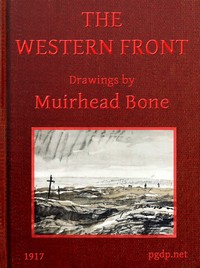
The Western Front by Sir Muirhead Bone and Earl Douglas Haig Haig
Let's get this out of the way: this isn't your typical war story. Published in 1917, 'The Western Front' is a piece of history, not historical fiction. It was created as a direct appeal to the American public, who had just entered the war. The book pairs the official, strategic perspective of Field Marshal Douglas Haig with the on-the-ground sketches and observations of Sir Muirhead Bone, Britain's first official war artist.
The Story
There's no protagonist or three-act structure. Instead, the 'story' is the argument the book makes. Haig writes essays defending his command, explaining the necessity of the grueling trench warfare and expressing absolute confidence in eventual victory. Bone's contribution is a visual diary: stunningly detailed drawings of soldiers, shattered landscapes, and the immense machinery of war. Together, they present a curated view of the front—orderly, purposeful, and heroic. The narrative they build is one of resilience and inevitable progress, a stark contrast to the chaotic, bloody stalemate most of us know from history books.
Why You Should Read It
The power of this book lies in the tension between its parts. Reading Haig's calm, assured prose about 'wearing down the enemy' feels surreal when you're simultaneously looking at Bone's drawing of exhausted men in a waterlogged trench. Bone's art, for all its technical brilliance, can't help but show the sheer scale of destruction and the weary faces of the men. You're seeing the war through two very privileged lenses, but even then, the truth seeps in around the edges. It made me think hard about how we're sold on war, even today. The confident language, the focus on engineering and logistics over human cost—it's a masterclass in persuasive, state-sanctioned messaging.
Final Verdict
This is a niche but gripping read for anyone interested in World War I beyond the battles. It's perfect for history buffs who want to analyze primary sources, or for readers curious about the origins of modern propaganda. You'll need some basic knowledge of the war's timeline to fully appreciate the context. Don't come for a thrilling adventure; come for a sobering, insightful look at how leaders frame a catastrophe for public consumption. Pair it with a soldier's memoir like 'Goodbye to All That' for the full, heartbreaking picture.
This digital edition is based on a public domain text. Thank you for supporting open literature.
David Davis
2 years agoThought-provoking and well-organized content.
Paul Allen
1 year agoA must-have for anyone studying this subject.
Margaret Davis
2 years agoSurprisingly enough, the content flows smoothly from one chapter to the next. Highly recommended.
Michelle Miller
4 months agoVery interesting perspective.
Susan Jones
1 year agoThe digital formatting makes it very easy to navigate.