About 204 minutes
Comic Tragedies Written by 'Jo' and 'Meg' and Acted by The 'Little Women' — A Closer Reading
Adventure Picaresque Fiction
46,879 recorded words. 15 minutes difference from this book's estimate.
View Gutenberg source #33986
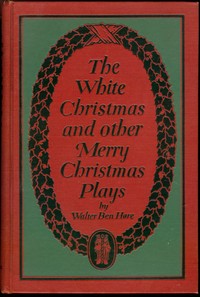
The White Christmas and other Merry Christmas Plays — Story, Setting & Ideas can be approached with a clearer sense of reading commitment from its source measurements: 50,169 words, 3 hr 39 min estimated reading time, and 9 detected text sections.
The text analysis averages about 10.3 words per sentence, while the detected sections provide another way to judge how the source is divided.
Project Gutenberg metadata also associates the work with “Christmas plays,” connecting these edition facts with the source record’s subject description.
Explore this collection
These alternatives are selected using recorded categories and estimated reading time.
About 204 minutes
Adventure Picaresque Fiction
46,879 recorded words. 15 minutes difference from this book's estimate.
View Gutenberg source #33986About 245 minutes
Adventure Picaresque Fiction
56,252 recorded words. 26 minutes difference from this book's estimate.
View Gutenberg source #47241About 163 minutes
Adventure Picaresque Fiction
37,374 recorded words. 56 minutes difference from this book's estimate.
View Gutenberg source #6783Search stored excerpts and compare books → Choose by your preferences →
Choices use stored catalog measurements. Estimates vary with reading speed. A shared category is a catalog label, not a claim that two books have the same argument or literary quality.
Search reads excerpt text stored with this catalog and links to its associated Gutenberg record. The connection is stored in the site database; this tool does not recheck that every excerpt is word-for-word identical to that external record. Excerpt search does not cover every chapter and does not verify historical publication dates.
Catalog snapshot checked: 2026-09-26. Coverage: 90 public books, 90 available source excerpts.
Calculated from edition completeness, EPUB availability, text structure and catalogue metadata. Not a user rating.
Total of 100 points, scaled to a 2.5-5.0 range. Editions with an empty description or a missing EPUB file are not scored.
Public-domain source text
The source text is kept in the dedicated reader, separate from this catalogue record and its commentary.
Walter Ben Hare's 1917 collection The White Christmas and Other Merry Christmas Plays opens with a foreword that explicitly names two "dominant characteristics" of the season: kindness and inward joy. Yet the plays themselves often lean toward broad comedy and physical gags, as in Where the Mulligans Live, where a wash-tub, soap-box seats, and a clothesline hung with red flannels set a deliberately shabby, lively scene. Hare's stage directions are unusually specific about costume and prop details—right down to the "large, old shoes" and "bright calico neckties"—suggesting a practical playwright who expected amateur productions with limited resources. The tension between earnest moralizing and rowdy stage business runs throughout the excerpts, giving the book a distinctive, uneven energy.
Hare devotes entire sections of his notes to describing what each character wears, and these descriptions often do more to define personality than the dialogue does. In Where the Mulligans Live, Mrs. Mulligan appears in a "well worn, old-fashioned cloth waist" with sleeves rolled up, a skirt of contrasting color turned up to show a flannel petticoat, and an apron "of ample proportions, but without bib." The boys Matsy and Patsy wear "long, tattered trousers, old suspenders, calico shirts, torn and patched." These are not generic poor people; they are carefully assembled visual types. The notes also specify that in Act III, Matsy dons a large black mustache and a coat much too large, while Patsy wears a dwarf's tunic with yellow makeup and rouge—a sudden shift into grotesque comedy that undercuts the play's sentimental ending. Hare treats costume as a flexible tool for both realism and farce, and the contrast between the shabby domestic setting and the exaggerated disguises creates a deliberate tonal wobble.
Hare writes Irish dialect with heavy phonetic spelling: Mrs. Mulligan says "Sure, I niver spint such a fine Christmas Eve in all me life before" and addresses the audience as "all of yeez." The effect is to mark the characters as both comic and authentic—a familiar stage Irishness that would have read as charming to contemporary audiences. Yet the dialect also carries the play's moral weight. Mrs. Mulligan's closing speech insists that a fine Christmas requires no money, only "loving hearts and loving hands, and merry faces of happy boys and girls." The contrast between the broad, accented humor and the earnest, universal message is typical of Hare's method. The same play that has a clothesline full of drying union suits and red flannels ends with a direct appeal to the spirit of Christmas as love. The dialect makes the sentiment feel homespun rather than preachy, but it also risks flattening the characters into types.
Hare's production notes repeatedly stress simplicity: "The scenery is very simple or may be dispensed with entirely." For Where the Mulligans Live, he specifies only entrances, a window, two tables, soap boxes, an upturned bucket, a wash-tub, and two chairs. Yet the stage is crowded with activity: a clothes line runs across the rear, hung with drying garments; tin cans filled with bright flowers stand on the table; colored prints adorn the walls. The effect is a deliberate clutter that signals poverty but also energy. Hare's note that "the stage must be arranged according to Mulligan taste" suggests a kind of aesthetic of makeshift abundance. This tension between minimal means and maximal visual detail mirrors the plays' thematic opposition of material lack and spiritual plenty. The physical production itself becomes a demonstration of the moral: you don't need money to make a scene.
Readers approaching this collection should pay attention to the stage directions and production notes, which often contain more specific character and setting information than the dialogue. Hare's plays were written for amateur groups with limited budgets and large casts of children, and the texts reflect that practical origin. The tension between sentimental uplift and knockabout comedy is not a flaw but a feature of the genre. For producers, the notes offer a rare window into early twentieth-century community theater practice; for readers, the plays are best understood as scripts meant to be performed, not read silently.
There’s something tender about old holiday plays—how they ask so little, just a room and kids willing to be silly, and still leave you thinking about kindness afterward. It reminded me of the way Man and Superman: A Comedy and a Philosophy — A Reader’s Guide lingers, not for its grand ideas, but for its quiet, human warmth between all the laughter.
Save your reaction, strongest insight, and memorable passage.