About 167 minutes
The Return of Peter Grimm — Themes and Context
Historical Psychological Social Fiction
38,257 recorded words. 29 minutes difference from this book's estimate.
View Gutenberg source #13319
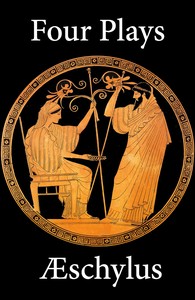
Before opening Four Plays of Aeschylus — A Closer Reading, the edition data offers a quick orientation: 44,894 words, 3 hr 16 min estimated reading time, and 9 detected text sections.
The text analysis averages about 19.2 words per sentence, while the detected sections provide another way to judge how the source is divided.
Project Gutenberg metadata also associates the work with “Mythology, Greek -- Drama,” connecting these edition facts with the source record’s subject description.
Explore this collection
These alternatives are selected using recorded categories and estimated reading time.
About 167 minutes
Historical Psychological Social Fiction
38,257 recorded words. 29 minutes difference from this book's estimate.
View Gutenberg source #13319About 155 minutes
Historical Psychological Social Fiction
35,627 recorded words. 41 minutes difference from this book's estimate.
View Gutenberg source #2296About 147 minutes
Historical Psychological Social Fiction
33,781 recorded words. 49 minutes difference from this book's estimate.
View Gutenberg source #4093Search stored excerpts and compare books → Choose by your preferences →
Choices use stored catalog measurements. Estimates vary with reading speed. A shared category is a catalog label, not a claim that two books have the same argument or literary quality.
Search reads excerpt text stored with this catalog and links to its associated Gutenberg record. The connection is stored in the site database; this tool does not recheck that every excerpt is word-for-word identical to that external record. Excerpt search does not cover every chapter and does not verify historical publication dates.
Catalog snapshot checked: 2026-09-26. Coverage: 90 public books, 90 available source excerpts.
Calculated from edition completeness, EPUB availability, text structure and catalogue metadata. Not a user rating.
Total of 100 points, scaled to a 2.5-5.0 range. Editions with an empty description or a missing EPUB file are not scored.
Public-domain source text
The source text is kept in the dedicated reader, separate from this catalogue record and its commentary.
E.D.A. Morshead's translation of Four Plays of Aeschylus presents the earliest surviving Greek tragedies in a Victorian poetic idiom that often heightens their formal, choral character. The volume includes The Suppliant Maidens, The Persians, The Seven Against Thebes, and Prometheus Bound—all that remain of what were originally parts of lost trilogies. Morshead's rendering favors rhythmic regularity and archaic diction, as when Xerxes commands the chorus to 'pluck out thy whitening beard' in a lament that alternates between single lines and choral refrains. The translator's introduction notes that only one complete trilogy, the Oresteia, survives from Aeschylus's oeuvre; these four plays are thus fragments of larger designs, each complete as a poem but missing their narrative context.
The excerpts show that choral passages are not decorative but carry the emotional and thematic weight of each play. In The Persians, the exchange between Xerxes and the chorus is built on antiphonal cries—'An agony, an agony!'—with the king directing the chorus's grief in a ritualized call-and-response. The stage direction 'Exeunt' after a long lyrical sequence suggests that the play's climax is performed through collective mourning rather than individual action. Similarly, The Suppliant Maidens is described as a drama where 'the lyric element predominates,' with the fugitive daughters expressing their plight in 'lyrical strains of quiet beauty.' Morshead's translation preserves this choral dominance by using repetitive, incantatory phrasing that mirrors the original Greek's formal structure.
In The Seven Against Thebes, Eteocles addresses the citizens as 'Clansmen of Cadmus' and frames the defense of the city as a sacred obligation: 'all to rise in aid / Of city, shrines, and altars of all powers / Who guard our land.' His speech uses nautical metaphors—'steers the ship of State / With hand upon the tiller'—to equate political leadership with skilled navigation. The play's argument, provided before the dialogue, summarizes the curse of Oedipus and the fratricidal war, but Eteocles's opening lines focus on collective responsibility rather than personal fate. The excerpts do not reveal whether the curse is fulfilled, but the emphasis on civic unity suggests that the play explores how individual ambition threatens the common good.
Morshead's introduction explicitly states that these four plays are 'fragments of lost Trilogies,' each once part of a larger narrative cycle. The excerpts offer glimpses of these missing contexts: The Suppliant Maidens ends with the maidens 'refer[ring] the whole question of their marriage to the subsequent decision of the gods,' implying a sequel that does not survive. The Persians closes with Xerxes leading a lament for the dead, but the historical aftermath of the Persian Wars is not dramatized. The translator's note that 'only a few words, or lines, or short paragraphs' remain from the lost plays underscores the incompleteness of the record. Readers must approach each play as a self-contained work while recognizing that its full meaning once depended on now-vanished companion pieces.
Because these plays are translated verse dramas from the 5th century BCE, readers should attend to the rhythm and repetition of Morshead's language, which often signals shifts between dialogue and choral ode. The absence of stage directions beyond basic entrances and exits means that performance elements—gesture, movement, music—must be imagined. Comparing the four plays reveals recurring patterns: supplication, lament, and the tension between human law and divine will. The catalog subjects 'Mythology, Greek — Drama' and 'Aeschylus — Translations into English' accurately describe the content, but the excerpts show that the plays are less about mythic plots than about collective emotional experience.
I keep thinking about how Aeschylus lets the chorus carry so much grief, the way collective voices hold what one person can’t say alone. That feeling stayed with me, like an echo. It reminded me of something quieter in The Lawyers, A Drama in Five Acts — Inside the Classic, where duty weighs on everyone differently, and the silence between lines says just as much.
Build a private reading journal entry for this title.