About 320 minutes
Plays by August Strindberg, Second series — Text and Context
Fantasy Juvenile Worlds
73,395 recorded words. 17 minutes difference from this book's estimate.
View Gutenberg source #14347
This digital edition of Lords and Lovers, and Other Dramas — Key Ideas to Explore is described by source-level measurements including 77,350 words, 5 hr 37 min estimated reading time, and 14 detected text sections.
The text analysis averages about 10.9 words per sentence, while the detected sections provide another way to judge how the source is divided.
Project Gutenberg metadata also associates the work with “American drama -- 20th century,” connecting these edition facts with the source record’s subject description.
Explore this collection
These alternatives are selected using recorded categories and estimated reading time.
About 320 minutes
Fantasy Juvenile Worlds
73,395 recorded words. 17 minutes difference from this book's estimate.
View Gutenberg source #14347About 196 minutes
Fantasy Juvenile Worlds
44,867 recorded words. 141 minutes difference from this book's estimate.
View Gutenberg source #45760About 165 minutes
Fantasy Juvenile Worlds
37,917 recorded words. 172 minutes difference from this book's estimate.
View Gutenberg source #11749Search stored excerpts and compare books → Choose by your preferences →
Choices use stored catalog measurements. Estimates vary with reading speed. A shared category is a catalog label, not a claim that two books have the same argument or literary quality.
Search reads excerpt text stored with this catalog and links to its associated Gutenberg record. The connection is stored in the site database; this tool does not recheck that every excerpt is word-for-word identical to that external record. Excerpt search does not cover every chapter and does not verify historical publication dates.
Catalog snapshot checked: 2026-09-26. Coverage: 90 public books, 90 available source excerpts.
Calculated from edition completeness, EPUB availability, text structure and catalogue metadata. Not a user rating.
Total of 100 points, scaled to a 2.5-5.0 range. Editions with an empty description or a missing EPUB file are not scored.
Public-domain source text
The source text is kept in the dedicated reader, separate from this catalogue record and its commentary.
Dargan's Lords and Lovers, and Other Dramas opens with a dying Pembroke exacting an oath from his son Richford to serve King Henry III, only to immediately undercut the vow by having Richford privately question the king's worth. This pattern of public allegiance shadowed by private reservation recurs throughout the three plays, each set in a distinct historical moment—13th-century England, biblical Judea, and revolutionary Russia—yet linked by characters caught between competing claims of love, art, and political action.
In Lords and Lovers, oaths are sworn with theatrical gravity but immediately tested. Pembroke makes Richford swear by God to serve the king, yet Richford's aside reveals his true priority: “I take this noble hand that ne'er was raised / 'Gainst country, throne or God, and by that God, / I vow to serve the king.” The wording is precise—he vows to serve, but his earlier question (“Where is the son / Would weep for Pembroke?”) suggests his loyalty is to his father, not the crown. Similarly, the legate Gualo's arrival from Rome is met with Pembroke's bitter remark, “Already I am dead,” implying that political maneuvering has rendered him irrelevant before his physical death. The play repeatedly stages moments where characters commit to one course while their language betrays another allegiance.
In The Shepherd, the violinist Vasil articulates a central tension: “Art can breathe only through life. I must live! Art is for men and women.” Yet his mentor Adrian insists the true artist must be “as impersonal as the universe.” The excerpts show Vasil struggling to reconcile his desire to engage with suffering—wanting to attend a dangerous meeting, to understand those he plays for—with the demand that his art remain detached. When Adrian forbids him, Vasil retorts, “If I were imprisoned, racked, dying, / I should want the music to go on.” The dialogue is built on such antitheses: personal feeling versus artistic discipline, political involvement versus aesthetic purity. Dargan does not resolve the conflict; instead, she lets it vibrate through the characters' exchanges.
Across the plays, characters use language to assert control or reveal helplessness. Pembroke, dying, insists on keeping his “last words for his ears” (the king's), claiming “There's holy magic in the passing tongue / That stamps its truth unrasurable.” Yet his authority is already slipping—he is not told of Gualo's arrival. In The Shepherd, Sophie tells Vasil, “Make your country your goddess, not a woman,” but Vasil's reply (“My country! What is it? The thing that raised a knout”) dismisses that abstraction. The princess herself is caught between roles: she kisses Vera as a friend, then must assert “I am a princess” to maintain distance. Dargan's characters often speak in commands, pleas, or conditional statements (“If you make black / Your soul with violation of this oath”), revealing how power is negotiated through every utterance.
Readers attentive to the plays' verbal textures will notice how Dargan uses repetition, interruption, and silence—Adrian's hand on Vasil's bow, the dropped violin—to dramatize moments when words fail or are refused. The collection rewards those who listen for what is not said as much as what is, and who track how each play reworks the same core tensions in different historical keys.
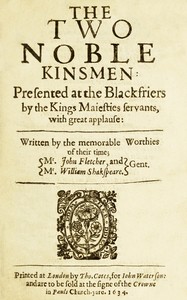
There’s something about Dargan’s dramas that stays with you like an old ache—how loyalty and duty pull against the heart. I found myself thinking of that quiet tension when I revisited The Two Noble Kinsmen — Edition Insights, where friendship and love tangle just as gently, and leave the same unresolved hush afterwards.
Your answers remain private and are stored only in this browser.