About 97 minutes
The Ghost Breaker: A Melodramatic Farce in Four Acts — Key Ideas to Explore
Fantasy Juvenile Worlds
22,169 recorded words. 3 minutes difference from this book's estimate.
View Gutenberg source #24702
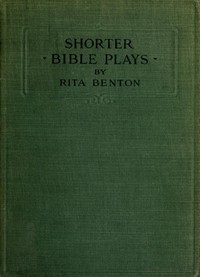
Shorter Bible Plays — Edition Insights can be approached with a clearer sense of reading commitment from its source measurements: 21,501 words, 1 hr 34 min estimated reading time, and 5 detected text sections.
The text analysis averages about 11.6 words per sentence, while the detected sections provide another way to judge how the source is divided.
Project Gutenberg metadata also associates the work with “Bible plays,” connecting these edition facts with the source record’s subject description.
Explore this collection
These alternatives are selected using recorded categories and estimated reading time.
About 97 minutes
Fantasy Juvenile Worlds
22,169 recorded words. 3 minutes difference from this book's estimate.
View Gutenberg source #24702About 88 minutes
Fantasy Juvenile Worlds
20,203 recorded words. 6 minutes difference from this book's estimate.
View Gutenberg source #2913About 105 minutes
Fantasy Juvenile Worlds
24,144 recorded words. 11 minutes difference from this book's estimate.
View Gutenberg source #11283Search stored excerpts and compare books → Choose by your preferences →
Choices use stored catalog measurements. Estimates vary with reading speed. A shared category is a catalog label, not a claim that two books have the same argument or literary quality.
Search reads excerpt text stored with this catalog and links to its associated Gutenberg record. The connection is stored in the site database; this tool does not recheck that every excerpt is word-for-word identical to that external record. Excerpt search does not cover every chapter and does not verify historical publication dates.
Catalog snapshot checked: 2026-09-26. Coverage: 90 public books, 90 available source excerpts.
Calculated from edition completeness, EPUB availability, text structure and catalogue metadata. Not a user rating.
Total of 100 points, scaled to a 2.5-5.0 range. Editions with an empty description or a missing EPUB file are not scored.
Public-domain source text
The source text is kept in the dedicated reader, separate from this catalogue record and its commentary.
Rita Benton's Shorter Bible Plays (1922) presents biblical narratives as dramatic scripts intended for religious and educational performance. The plays rely heavily on direct quotation from scripture, weaving passages such as Psalm 23 into the dialogue of David and Saul. Stage directions are minimal but functional, indicating entrances, exits, and basic actions like kneeling or reclining. The language is consistently formal and archaic, echoing the King James Version, which gives the plays a reverent tone. Benton includes both longer and shorter versions of the Judgment of Solomon, suggesting an awareness of different performance contexts. The collection opens with a dedicatory poem that frames maternal love as a reflection of divine care, establishing a gentle, instructive mood.
Benton's primary technique is the direct adaptation of biblical verses into spoken lines. In David and Goliath, David sings the entirety of Psalm 23 as a performance for King Saul, and Saul responds with lines like “Cursed be the day I was born” taken from Job. The dialogue often preserves the syntax and vocabulary of the King James Version, creating a consistent, elevated register. This approach means that the plays function almost as dramatic readings of scripture, with minimal interpolation. The editor's introduction notes that children acting these stories “learn how intimately the past is linked to the present,” suggesting that the language itself is meant to bridge temporal distance. However, Benton does occasionally insert connective phrases, such as “Peace, men!” or “Be not ashamed,” to smooth transitions. These small additions are the most visible evidence of the author's hand.
The stage directions in Shorter Bible Plays are sparse but strategically placed to control rhythm. In the excerpt from David and Goliath, directions like “Sound of trumpets to the left” and “Shouting from the left” create a sense of offstage action and urgency. Characters run in and out, messengers blow horns, and the repeated phrase “News for the king!” builds tension. Benton also uses repetition within dialogue: Saul twice says “there is none to withstand them,” and the second messenger echoes the first. This mirroring slows the pace and emphasizes the threat. In contrast, the scene with David's singing is static, with Saul reclining and the action pausing for the psalm. The juxtaposition of frantic messenger scenes and quiet musical interludes gives the play a varied tempo that would be effective in performance.
Benton differentiates characters primarily through their speech. King Saul speaks in exclamations and rhetorical questions (“Cursed be the day I was born!”), conveying his distress and volatility. David, by contrast, uses the measured, poetic language of the psalms, even in his spoken lines: “My father bade me seek thee with this loaf, / And flask of wine.” The elder brother Eliab speaks in accusatory, prose-like sentences (“What do you here? And why art thou come down?”), which contrasts with David's lyrical responses. The messengers use short, urgent phrases (“News! News for the king!”) that mark them as functional rather than individual. These patterns are consistent across the plays, suggesting that Benton relied on biblical archetypes rather than developing original personalities. The result is a cast that feels familiar but not flat, with each voice serving the story's moral and dramatic needs.
Readers approaching Shorter Bible Plays should attend to the interplay between scriptural quotation and original stage directions. The plays are designed for performance by children, and the language rewards reading aloud. Notice how Benton uses repetition and variation to create dramatic tension within the constraints of biblical text. The collection offers a window into early twentieth-century religious education, where drama was seen as a tool for moral instruction. For those interested in adaptation, these plays demonstrate a method of transforming narrative into dialogue while preserving the source's cadence and authority.
I remember how Shorter Bible Plays unfolds its ancient stories through nothing but voices — spare, direct, trusting the words to carry the whole stage. That quiet faith in dialogue reminds me of another patience, the one in The Two Noble Kinsmen — Edition Insights, where two friends also speak their way toward a bond neither can quite name. Both simply wait, and listen.
Your answers remain private and are stored only in this browser.